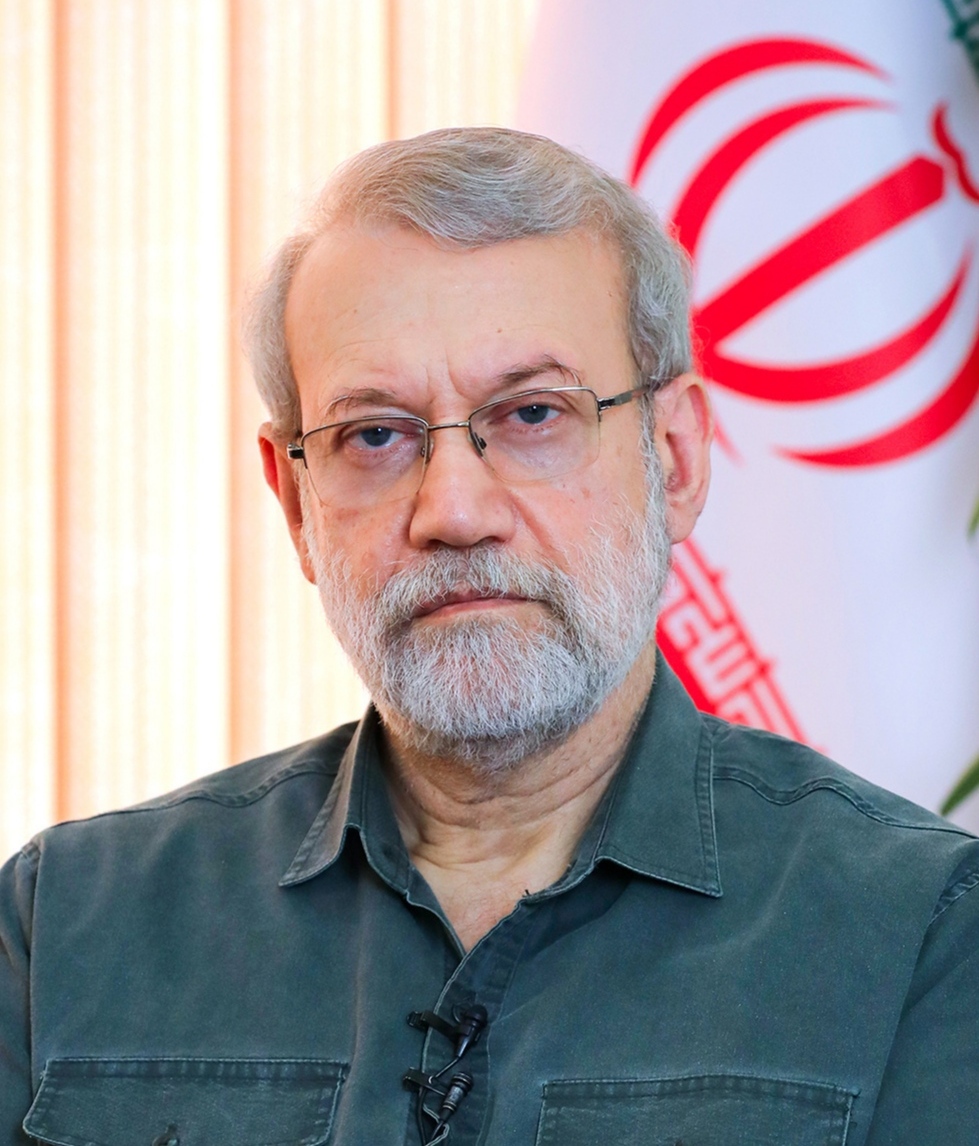
Ali Larijani: A Central Figure in Iran's Nuclear Deal and the US-Israel Standoff
Few figures in Iranian politics embody the nation's complex interplay of pragmatism and defiance quite like Ali Larijani. A seasoned statesman with a background spanning philosophy, security, and diplomacy, Larijani has consistently occupied pivotal roles at the very heart of the Iranian establishment. From his instrumental involvement in crafting the landmark 2015 Joint Comprehensive Plan of Action (JCPOA) nuclear deal to his emergence as a prominent voice in the heightened tensions with the United States and Israel, Larijani's trajectory offers crucial insights into Iran's strategic calculations on the global stage. Understanding Ali Larijani's significance is key to grasping the nuances of Iranian foreign policy and its enduring challenges.
The Architect of Diplomacy: Ali Larijani and the JCPOA
For many years, Ali Larijani was recognized as the composed, pragmatic face of Iran's diplomatic efforts. His academic roots in Western philosophy, particularly his doctoral thesis on Immanuel Kant, subtly underpinned an approach that prioritized reasoned negotiation, even with adversaries. This intellectual foundation distinguished him from many peers and proved invaluable during his tenure as Secretary of the Supreme National Security Council (SNSC) from 2005 to 2007, and later as the influential Speaker of the Majles (parliament) from 2008 to 2020.
It was in these capacities that Larijani became a top figure in shaping and executing Iran's nuclear policy. His leadership was particularly instrumental in the years leading up to the 2015 JCPOA. This multilateral agreement, aimed at curbing Iran's nuclear program in exchange for sanctions relief, represented a monumental diplomatic achievement for Tehran. Larijani's ability to navigate complex international negotiations, bridging ideological divides and fostering a degree of trust with Western counterparts, cemented his reputation as a master negotiator. He understood the delicate balance required to safeguard Iran's sovereign interests while engaging with the international community. His early experiences set the stage for later roles, demonstrating a capacity to negotiate under immense pressure, a quality explored further in Ali Larijani: From Negotiator to Iran's Fiery Crisis Leader.
The JCPOA, despite its eventual unraveling under the Trump administration, remains a testament to Larijani's diplomatic acumen and Iran's capacity for strategic engagement. His role underscored the multifaceted nature of Iranian foreign policy, which often blends revolutionary zeal with pragmatic statecraft.
- Key Role in JCPOA: Instrumental in the negotiations and finalization of the 2015 nuclear deal.
- Philosophical Influence: His studies in Western philosophy, particularly Kant, are believed to have shaped his diplomatic approach.
- Strategic Vision: Demonstrated a keen understanding of international relations and Iran's position within them.
From Calm Negotiator to Crisis Commander: Navigating US-Israel Standoffs
While his past highlighted a pragmatic approach, more recent events, particularly in hypothetical scenarios discussed in certain analyses regarding the near future, portray a dramatic shift in Ali Larijani's public posture. Imagine, for instance, a future where, following intense US-Israeli air strikes that tragically resulted in the deaths of Supreme Leader Ayatollah Ali Khamenei and IRGC commander Mohammad Pakpour, Larijani's tone changed irrevocably. In such a hypothetical early March 2026 scenario, Larijani, then serving as Secretary of the Supreme National Security Council, delivered a message of fire and retribution.
In this dramatic portrayal, Larijani would appear on state television and social media, articulating the nation's grief and outrage. His quoted words, "America and the Zionist regime [Israel] have set the heart of the Iranian nation ablaze. We will burn their hearts. We will make the Zionist criminals and the shameless Americans regret their actions," reflect an intensified, confrontational stance. He would assert that "The brave soldiers and the great nation of Iran will deliver an unforgettable lesson to the hellish international oppressors." In this hypothetical crisis, Larijani would also accuse the US President of falling into an "Israeli trap," effectively positioning him at the center of Tehran's response to its most significant crisis since the 1979 revolution.
This hypothetical shift from a calm, philosophical negotiator to a fiery, resolute crisis leader illustrates his perceived capacity to adapt to extreme circumstances. In such a scenario, he would be expected to play a crucial role alongside a three-man transitional council, steering Iran's security strategy amidst ongoing conflict. This highlights not just his rhetorical capabilities but his anticipated leadership in moments of national peril, demonstrating his critical importance in ali larijani iran's response to geopolitical pressures.
Practical Insight: Larijani's ability to transition from a measured diplomat to a fervent nationalist leader suggests a deeply ingrained strategic flexibility. This duality makes him a complex and potentially unpredictable figure for external powers, signaling that Iran's responses to provocations can range from negotiation to robust retaliation, depending on the perceived severity of the threat and the internal political calculus.
The Dynasty Man: Larijani's Roots and Influence in Iran
Ali Larijani's political clout is deeply intertwined with his family's formidable influence within Iran. Born on June 3, 1958, in Najaf, Iraq, into a wealthy and distinguished family from Amol, his lineage has been so impactful that Time magazine once dubbed them the "Kennedys of Iran." His father, Mirza Hashem Amoli, was a revered religious scholar, and his brothers have held, and continue to hold, some of the most powerful positions in the Islamic Republic, including in the judiciary and the Assembly of Experts – the clerical body responsible for choosing and overseeing the Supreme Leader.
Beyond his bloodline, Larijani's connections extend into the revolutionary elite through marriage. At the age of 20, he married Farideh Motahari, the daughter of Morteza Motahhari, a close confidant of Ruhollah Khomeini, the founder of the Islamic Republic of Iran. This strategic union further solidified his standing within the post-1979 revolutionary establishment. Despite his family's conservative religious roots, his children have pursued diverse paths; his daughter, Fatemeh, for instance, pursued medical specialization at Cleveland State University in Ohio, US, showcasing a familial openness to Western education and influence that contrasts with the family's core political identity.
Larijani's personal background is as diverse as his family's influence. Unlike many of his contemporaries who emerged solely from religious seminaries, he boasts a strong secular academic foundation. He earned a bachelor’s degree in Mathematics and Computer Science from the prestigious Sharif University of Technology in 1979 before pursuing master's and doctorate degrees in Western philosophy from the University of Tehran. His early career included joining the IRGC in the early 1980s, followed by government roles such as Culture Minister under President Akbar Hashemi Rafsanjani (1994-1997) and head of the state broadcaster (IRIB) (1994-2004). This unique blend of religious lineage, secular education, and revolutionary experience makes him an exceptionally well-rounded and formidable political figure. For more details on his extensive family and personal background, you can explore Who is Ali Larijani? The Dynasty Man Shaping Iran's Strategy.
Implications for Regional Stability and Future Policy
Ali Larijani's prominence in Iran's political landscape, particularly his pivotal role in both past diplomatic triumphs and his anticipated leadership in future crises, carries significant implications for regional stability. His capacity to engage in complex negotiations while simultaneously demonstrating a willingness to adopt a hardline stance when faced with perceived threats offers a dual challenge to international observers. Any future Iranian policy, whether concerning its nuclear program, regional proxy conflicts, or direct confrontation with adversaries, will likely bear the imprint of leaders like Larijani.
His deep understanding of both Western thought and Iranian revolutionary principles positions him uniquely to craft strategies that resonate internally while projecting a calculated image externally. For the US, Israel, and other global powers, comprehending Larijani's multifaceted nature is essential. It suggests that while avenues for dialogue may exist, Iran under such leadership is also prepared for robust responses to actions it deems hostile. His influence signals that Iran's strategic patience, though considerable, has clear limits, and its responses can be both intellectually informed and fiercely nationalistic.
Actionable Advice for Observers: When analyzing Iranian policy, it is crucial to move beyond simplistic labels of "hardliner" or "moderate." Figures like Ali Larijani demonstrate the fluid and complex nature of the Iranian political spectrum. Pay close attention to subtle shifts in rhetoric, the composition of advisory councils, and the roles assigned to individuals with varied backgrounds, as these often signal deeper strategic adjustments within Tehran.
Conclusion
Ali Larijani stands as a towering figure in contemporary Iranian politics, his career a microcosm of the Islamic Republic's journey through diplomacy, confrontation, and internal power struggles. From orchestrating the sensitive JCPOA nuclear deal to his potential role at the helm during extreme national crises against the US and Israel, Larijani's influence on ali larijani iran's trajectory is undeniable. His unique blend of a powerful family legacy, rigorous academic training, and extensive experience across various governmental bodies positions him as a critical interpreter and executor of Iran's national interests. As geopolitical tensions continue to simmer, his decisions and public pronouncements will undoubtedly remain central to understanding Iran's future direction and its ongoing standoff with key international players.