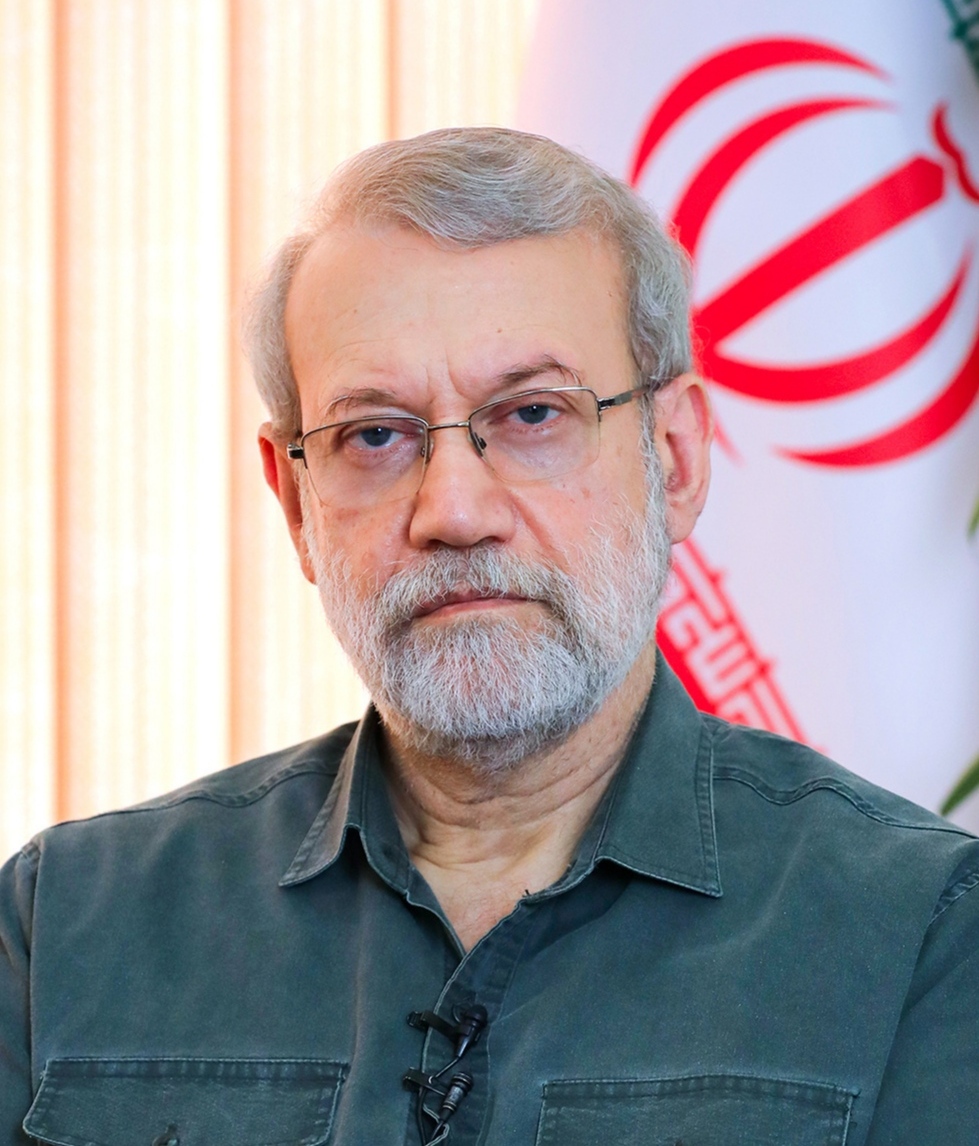
In the complex and often opaque world of Iranian politics, certain figures cast long shadows, shaping the nation's trajectory with their influence and strategic acumen. One such individual is Ali Larijani, a name synonymous with power, pragmatism, and, more recently, a fiery defiance that has placed him at the very heart of Iran's gravest challenges. From a seasoned diplomat who meticulously negotiated nuclear agreements with the West to a vocal proponent of retaliation against perceived adversaries, Larijani's evolution reflects the dynamic and often tumultuous currents within the Iranian establishment. His story is not just a personal biography but a lens through which to understand the intricate workings of ali larijani iran's power structure and its strategic outlook in a rapidly changing geopolitical landscape.
Ali Larijani: A Legacy Forged in a Powerful Dynasty
The "Kennedys of Iran": Family Roots and Influence
Born on June 3, 1958, in the holy city of Najaf, Iraq, Ali Larijani hails from a lineage so influential that Time magazine once dubbed them the "Kennedys of Iran." This wasn't merely hyperbole; the Larijani family, originally from Amol, Mazandaran province, represents a deep-seated blend of religious scholarship, political power, and strategic thinking that is unparalleled in contemporary Iranian history. His father, Mirza Hashem Amoli, was a revered Grand Ayatollah and a prominent religious scholar, providing a foundational link to Iran's clerical hierarchy.
Ali Larijani is not alone in his prominence. His four brothers have also occupied some of the most critical positions within the Islamic Republic, including the head of the judiciary, members of the Guardian Council, and the Assembly of Experts – the powerful clerical body responsible for appointing and overseeing the Supreme Leader. This familial nexus of power ensures that the Larijanis are not just individuals in influential roles but represent a formidable bloc, shaping decisions across legislative, judicial, and executive branches. Such dynastic influence offers a fascinating insight into how power is consolidated and wielded in ali larijani iran, often through intricate networks of kinship and shared ideology, ensuring a degree of stability and continuity in the nation's leadership.
Further solidifying his ties to Iran's post-1979 revolutionary elite, Larijani married Farideh Motahari, the daughter of Morteza Motahhari, a close confidant of the Islamic Republic's founder, Ayatollah Ruhollah Khomeini. This marriage wove him even deeper into the fabric of the revolutionary establishment, providing not just personal connections but also an ideological heritage that has guided his career. Interestingly, despite these deeply conservative religious roots, his children have pursued diverse paths, with his daughter, Fatemeh, a medical graduate from the University of Tehran, completing her specialization in the United States, illustrating a nuanced modernity within the family.
Beyond the Seminary: Education and Early Career
Unlike many of his clerical peers who rose solely through the ranks of religious seminaries, Ali Larijani possesses a distinctive intellectual foundation. His academic journey began in 1979, the year of the Islamic Revolution, when he earned a bachelor's degree in Mathematics and Computer Science from the prestigious Sharif University of Technology. This secular grounding provided him with a analytical rigor not always found among the traditional clergy.
He later pursued and completed master's and doctorate degrees in Western philosophy from the University of Tehran, demonstrating a remarkable intellectual curiosity. His doctoral thesis on the 18th-century German philosopher Immanuel Kant underscores a sophisticated understanding of Western thought, a rare attribute for a high-ranking Iranian official. This dual academic background — a blend of modern science and classical philosophy — has arguably equipped Larijani with a unique perspective, enabling him to navigate complex diplomatic and strategic challenges with both pragmatism and a deep understanding of ideological underpinnings.
Following the 1979 revolution, Larijani joined the Islamic Revolutionary Guard Corps (IRGC) in the early 1980s, gaining practical experience in Iran's nascent defense and security apparatus. This foundational period in the IRGC was a common path for many who would later ascend to positions of power, providing a shared ethos and loyalty to the revolutionary ideals.
Architect of Iran's Geopolitical Chessboard: From Negotiation to Confrontation
Key Positions and Strategic Impact
Ali Larijani's political career is marked by an almost continuous presence at the pinnacle of ali larijani iran's power structure. He transitioned from military service to government, serving as Culture Minister under President Akbar Hashemi Rafsanjani between 1994 and 1997. Following this, he headed the state broadcaster (IRIB) from 1994 until 2004, a critical role in shaping public opinion and narrative within Iran.
His most impactful roles, however, have been in national security and legislative leadership. From 2005 to 2007, he served as the Secretary of the Supreme National Security Council (SNSC), a pivotal body responsible for coordinating defense, intelligence, and foreign policy. This position placed him directly at the forefront of ali larijani iran's strategic planning. After a brief hiatus, he returned to the SNSC in 2025, signaling his enduring importance in Iran's highest security echelons. Concurrently, he held the influential position of Speaker of the Majles (Parliament) from 2008 to 2020, demonstrating significant legislative power and acting as a key figure in domestic policy formation.
The Nuclear Negotiator: Crafting the JCPOA
It was during his initial tenure as SNSC Secretary that Ali Larijani cemented his reputation as a master negotiator, particularly concerning Iran's nuclear program. He was a top figure in conducting Iran’s nuclear policy and was instrumental in navigating the complex international landscape surrounding the country's nuclear ambitions. This period saw him engage directly with Western powers, laying much of the groundwork that would eventually lead to the landmark 2015 Joint Comprehensive Plan of Action (JCPOA) nuclear deal.
The JCPOA represented a monumental diplomatic achievement, temporarily easing tensions between Iran and world powers by limiting Iran's nuclear activities in exchange for sanctions relief. Larijani's involvement highlighted his capacity for pragmatic engagement, showcasing his ability to find common ground even amidst profound geopolitical differences. His deep understanding of both Iranian red lines and international demands made him an indispensable figure in these delicate discussions. His pivotal involvement in such high-stakes negotiations underlines Ali Larijani's key role in Iran's nuclear deal & US-Israel standoff.
Navigating Crisis: Larijani's Role in a Volatile Future
The Shift to Defiance: A New Era for Larijani
While often seen as the calm and pragmatic face of the Iranian establishment, March 1, 2026, marked an irrevocable shift in Ali Larijani's public persona. Appearing on state television just 24 hours after US-Israeli air strikes reportedly killed Supreme Leader Ayatollah Ali Khamenei and IRGC commander Mohammad Pakpour, Larijani delivered a message imbued with fire and resolve. Accusing US President Donald Trump of falling into an "Israeli trap," he vowed harsh retaliation, declaring on social media, "America and the Zionist regime [Israel] have set the heart of the Iranian nation ablaze. We will burn their hearts. We will make the Zionist criminals and the shameless Americans regret their actions."
This dramatic change in tone positioned Larijani squarely at the center of Tehran's response to what is arguably its biggest crisis since the 1979 revolution. As the current Secretary of the Supreme National Security Council, he is explicitly tasked with leading the war effort against the United States and Israel. This role underscores his critical importance in formulating and executing ali larijani iran's strategic responses during an unprecedented period of regional tension.
The Post-Khamenei Landscape: Larijani's Potential Path
With the profound changes hinted at in the political landscape, Larijani is expected to play an exceptionally important role alongside the three-man transitional council now running Iran. Furthermore, in late February 2026, he was designated as a preferred candidate for future leadership, a clear indicator of his continued relevance and potential to ascend to the highest echelons of power in ali larijani iran. This designation suggests that despite his past pragmatic approach, or perhaps because of it, he is viewed as a figure capable of providing strong leadership during a period of immense uncertainty.
His deep ties to both the clerical establishment and the revolutionary guard, coupled with his diplomatic experience and intellectual background, make him a uniquely qualified candidate to navigate the treacherous waters ahead. His shift to a more defiant posture could be seen as a strategic move to consolidate support from hardline factions while still retaining the respect of those who value his diplomatic acumen. Understanding Ali Larijani is thus not merely about understanding an individual, but about grasping the forces that will shape Iran's strategy for years to come.
In conclusion, Ali Larijani stands as a monumental figure in ali larijani iran's political narrative. From his roots in a powerful dynastic family and a unique blend of secular and philosophical education, he has consistently occupied strategic positions that have allowed him to influence national security, foreign policy, and legislative direction. His instrumental role in the JCPOA showcased his pragmatic approach to complex international relations, while his recent fiery declarations underscore his adaptability and commitment to defending Iran's perceived interests in times of crisis. As ali larijani iran grapples with its biggest challenges in decades, his continued presence at the heart of the decision-making process, coupled with his potential for future leadership, ensures that he will remain a central architect of the nation's strategy, demonstrating an enduring influence that transcends individual political appointments.